Elphinstone College

About

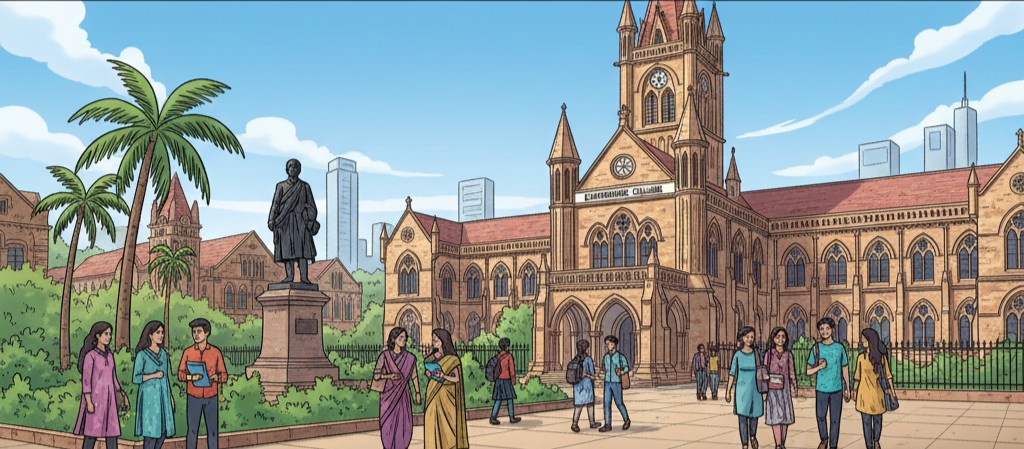
Elphinstone College, Mumbai is one of India’s oldest centres of modern learning, founded in 1856 and housed within a striking Gothic Revival heritage building in the heart of the Fort precinct. The college has played a defining role in shaping the intellectual and social development of Mumbai and the country. With its arched corridors, stone façades, and historic character, the institution continues to stand as a proud reminder of the city’s academic legacy.

Over the decades, Elphinstone College has produced some of India’s most influential leaders, thinkers, and reformers. Its association with figures such as Dadabhai Naoroji, Gopal Krishna Gokhale, Mahadev Govind Ranade, and Jamsetji Tata reflects its deep-rooted impact on India’s educational and political landscape. Today, it functions under the Dr. Homi Bhabha State University (HBSU) framework while retaining its heritage identity.

Visitors and students appreciate the unique ambience of the campus, where Victorian architecture blends seamlessly with the dynamic energy of South Mumbai. Located near the Kala Ghoda cultural district, the college is a landmark often admired by history enthusiasts, architecture lovers, and tourists exploring the old Fort area.

  • One of the earliest modern educational institutions in India
  • Heritage Gothic Revival building designed by James Trubshaw
  • Notable alumni include several national leaders and reformers
  • Located in Fort, close to Kala Ghoda and major attractions
  • Strong academic presence under HBSU
  • Classic old-building charm with high ceilings, arches, and heritage corridors
  • Popular for heritage walks and cultural exploration
About

Mumbai is one of India’s oldest centres of modern learning, founded in 1856 and housed within a striking Gothic Revival heritage building in the heart of the Fort precinct. The college has played a defining role in shaping the intellectual and social development of Mumbai and the country. With its arched corridors, stone façades, and historic character, the institution continues to stand as a proud reminder of the city’s academic legacy.

Over the decades, Elphinstone College has produced some of India’s most influential leaders, thinkers, and reformers. Its association with figures such as Dadabhai Naoroji, Gopal Krishna Gokhale, Mahadev Govind Ranade, and Jamsetji Tata reflects its deep-rooted impact on India’s educational and political landscape. Today, it functions under the Dr. Homi Bhabha State University (HBSU) framework while retaining its heritage identity.

Visitors and students appreciate the unique ambience of the campus, where Victorian architecture blends seamlessly with the dynamic energy of South Mumbai. Located near the Kala Ghoda cultural district, the college is a landmark often admired by history enthusiasts, architecture lovers, and tourists exploring the old Fort area.

Key Highlights

  • ๐ŸŽ“ One of the earliest modern educational institutions in India
  • ๐Ÿ›๏ธ Heritage Gothic Revival building designed by James Trubshaw
  • โญ Notable alumni include several national leaders and reformers
  • ๐ŸŒ† Located in Fort, close to Kala Ghoda and major attractions
  • ๐Ÿ“š Strong academic presence under HBSU
  • ๐Ÿ•ฐ๏ธ Classic old-building charm with high ceilings, arches, and heritage corridors
        • ๐Ÿ” Popular for heritage walks and cultural exploration


History & Evolution ๐Ÿ“œ

Elphinstone College, Mumbai is deeply woven into the story of modern education in India. Established in 1856, the college is named after Mountstuart Elphinstone, the progressive Governor of Bombay who encouraged Western-style learning and institutional reform. Its foundation was strengthened by contributions from Indian visionaries such as Jagannath Shankarseth and other reform-minded citizens who viewed education as the key to India’s advancement.

In its early years, the college became one of the most prominent centres for higher learning under British rule. It also served as an early home for the University of Bombay, making it a cornerstone of academic development in the city. Over the decades, Elphinstone College attracted ambitious students and scholars who later became major influencers in India’s political, social, and economic landscape.

The institution’s role extended beyond academics, shaping intellectual movements, social reform initiatives, and public debate in Mumbai. After Independence, it continued to uphold excellence and accessibility as a government-run college. Today, the college operates under the Dr. Homi Bhabha State University (HBSU) framework while preserving its heritage identity and historic academic culture.

Key Highlights

  • ๐Ÿ“œ Established in 1856, one of India’s earliest modern colleges
  • ๐Ÿ›๏ธ Named after Mountstuart Elphinstone, reform-oriented Governor of Bombay
  • โœ๏ธ Early supporters included Jagannath Shankarseth and Indian reformers
  • ๐ŸŽ“ Served as an early home for the University of Bombay
  • โญ Played a key role in shaping India’s intellectual and political leadership
  • ๐ŸŒ† Strong influence on the academic and social evolution of Mumbai
  • ๐Ÿซ Continues under the HBSU framework with a heritage legacy
0211
Heritage Architecture & Design๐Ÿ›๏ธ

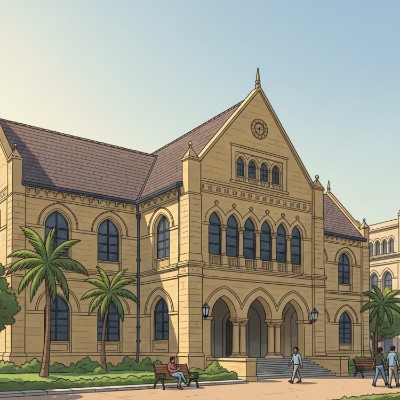
Elphinstone College, Mumbai is one of its most defining features. Designed by James Trubshaw, the magnificent building represents classic Gothic Revival architecture, echoing the Victorian era that shaped much of South Mumbai’s historic Fort precinct. Its stone façade, pointed arches, and symmetrical proportions reflect the British architectural style introduced during the mid-19th century.

The exterior is characterised by carved stone blocks, tall arched windows, and elegant columned sections, giving the college a commanding presence along MG Road. Inside, the design features wide corridors, high ceilings, and spacious classrooms that maintain the original colonial layout. Many of the internal design elements, including the wooden rafters and stone staircases, showcase the craftsmanship of the period.

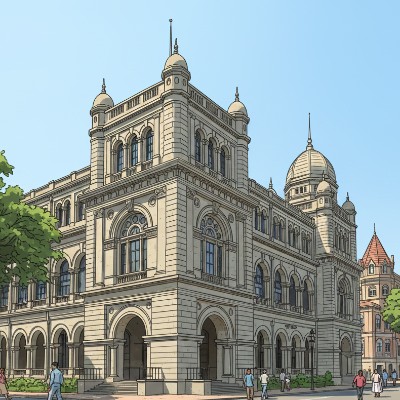
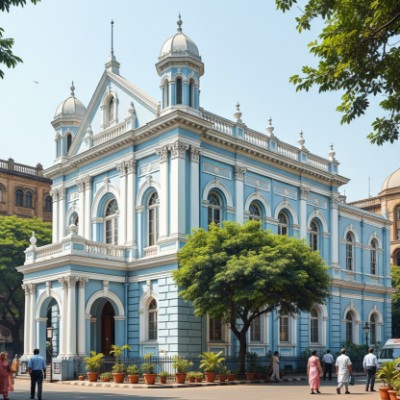
This heritage structure is also a part of the broader Kala Ghoda–Fort Victorian ensemble, which includes other iconic buildings such as the David Sassoon Library, Jehangir Art Gallery, and the Bombay High Court. Together, they form one of the most prominent heritage zones in Mumbai.

Key Highlights     

  • ๐Ÿชจ Ornate stone façade with pointed arches and carved stone detailing
  • ๐Ÿ›๏ธ Classic Gothic Revival architecture from the mid-19th century
  • ๐ŸชŸ High arched windows and long ventilated corridors
  • ๐Ÿซ Internal layout retains original colonial design features
  • ๐Ÿชต Wooden rafters, heritage staircases, and period-style interiors
  • ๐ŸŒ† Part of the larger Victorian heritage zone of Fort and Kala Ghoda
  • ๐Ÿ“ธ Popular spot for heritage walks, photography, and architectural study


Academic Significance ๐ŸŽ“

Elphinstone College, Mumbai holds an important place in the development of modern Indian education. Since its founding in 1856, the college has been an academic hub where some of India’s earliest structured courses in arts, sciences, and commerce were introduced. It played a pioneering role in shaping the curriculum and standards that later influenced educational institutions across the country.

The college was once the academic seat that supported the early functions of the University of Bombay (now University of Mumbai), placing it at the heart of higher education reforms during the British era. Over the decades, its departments contributed greatly to scholarship, research, and public discourse, especially in literature, political science, economics, and social sciences.

Today, under the Dr. Homi Bhabha State University (HBSU) framework, Elphinstone College continues to offer undergraduate programmes in Arts, Science, and Commerce. It maintains a strong reputation for academic discipline, accessible education, and committed faculty members who focus on building foundational knowledge rather than commercialised education models.

For generations, the college has been known for producing thinkers, administrators, researchers, and reformers who shaped Indian society. Its academic legacy continues to attract students who value a traditional yet inspiring learning environment in the heart of Mumbai’s cultural district.

Key Highlights

  • ๐ŸŽ“ One of the earliest centres of structured higher education in India
  • ๐Ÿซ Supported the early functioning of the University of Bombay
  • ๐Ÿ“š Strong departments in Arts, Science, and Commerce
  • ๐Ÿ‘ฉ‍๐Ÿซ Known for dedicated faculty and foundational academic approach
  • ๐Ÿง  Produced scholars, reformers, and national leaders
  • ๐ŸŒ Continues academic programmes under HBSU
  • ๐Ÿ›๏ธ Blends heritage environment with modern academic roles
0411
Notable Alumini โญ

Elphinstone College, Mumbai has nurtured some of the most influential personalities in India’s intellectual, political, and industrial history. The college’s prestige is closely tied to its legendary alumni who became national leaders, freedom fighters, social reformers, legal pioneers, and iconic entrepreneurs. Their association with the institution highlights its long-standing role in shaping modern India.

Among the most distinguished alumni is Dadabhai Naoroji, one of India’s earliest nationalist thinkers and the first Indian elected to the British Parliament. Gopal Krishna Gokhale, a key mentor to Mahatma Gandhi and a prominent social reformer, also studied here. Reformist judge Mahadev Govind Ranade, who contributed significantly to economic and social thought, is another iconic figure from the college.

Industrial pioneer Jamsetji Tata, founder of the Tata Group, also walked the corridors of Elphinstone College, setting the foundation for one of the world’s most respected business empires. Other notable alumni include administrators, educationists, and cultural leaders who influenced various aspects of Indian society.

Key Highlights

  • โญ Dadabhai Naoroji – Father of Indian Economics, first Indian MP in Britain
  • โญ Gopal Krishna Gokhale – Senior freedom movement leader, Gandhiji’s mentor
  • โญ Mahadev Govind Ranade – Social reformer, judge, and economist
  • โญ Jamsetji Tata – Visionary industrialist, founder of the Tata Group
  • ๐Ÿ“š Several scholars, administrators, and reformers shaped Indian society
  • ๐Ÿ›๏ธ Alumni represent a blend of political, academic, and industrial leadership


Camps Experience & Atmosphere ๐ŸŒฟ

The campus atmosphere at Elphinstone College, Mumbai is a blend of heritage charm, academic seriousness, and the cultural vibrancy of South Mumbai. Its iconic Gothic building immediately sets a timeless tone, with arched walkways, stone walls, and high ceilings that create a peaceful, almost museum-like ambience. Students often describe the campus as inspiring and grounding, especially for those who appreciate history and architecture.

The corridors remain cool and breezy, even in summer, due to the thick stone construction typical of 19th century colonial buildings. Classrooms are spacious and filled with natural light, offering an old-world learning environment uncommon in modern colleges. The campus, though not very large, is strategically located in the Fort area, allowing students to step into a neighbourhood filled with art galleries, cafés, heritage structures, and cultural spaces.

Visitors often note the calmness inside the campus compared to the bustling MG Road outside. Its proximity to Jehangir Art Gallery, CSMVS, and the Kala Ghoda district enhances its overall academic and cultural atmosphere, making the college an integral part of Mumbai’s artistic and intellectual landscape.

Key Highlights

  • ๐ŸŒฟ Peaceful, heritage-rich academic environment
  • ๐Ÿ›๏ธ Gothic architecture lends a unique old-world charm
  • ๐Ÿงฑ Thick stone corridors keep the building cool
  • โ˜€๏ธ Classrooms with natural lighting and colonial-era proportions
  • ๐ŸŽจ Located near Kala Ghoda, CSMVS, and major cultural landmarks
  • ๐ŸŒ† Strong cultural and intellectual vibe
  • ๐Ÿง‘‍๐Ÿซ Ideal for students who appreciate history, art, and heritage settings
0611
Heritage Grade& Conservation Status ๐Ÿ—๏ธ

Elphinstone College, Mumbai is recognised as a Grade I heritage structure, placing it among the highest-protected buildings in the city’s conservation framework. This classification is reserved for architectural landmarks of exceptional historical, cultural, and architectural importance. Being part of the Victorian-era ensemble in the Fort and Kala Ghoda precinct, the college falls under strict conservation guidelines that ensure the preservation of its original Gothic Revival design.

As a Grade I heritage building, any modification, repair, or restoration requires approval from heritage conservation committees, including the Mumbai Heritage Conservation Committee (MHCC). The conservation approach focuses on maintaining the authenticity of the building—its stone façade, wooden elements, arches, staircases, and overall structural form.

Over time, the college has undergone periodic conservation work to strengthen its ageing structure while retaining its integrity. Restoration projects typically involve stone cleaning, reinforcement of wooden beams, waterproofing, and preservation of architectural details. These efforts are essential due to the building’s age, coastal climate, and the naturally evolving needs of an academic institution.

The heritage status also enhances the building’s role as a cultural landmark within South Mumbai. Its presence contributes to the character of the Kala Ghoda district, a zone celebrated for Victorian, neo-Gothic, and Indo-Saracenic architecture.

Key highlights

  • ๐Ÿ—๏ธ Classified as a Grade I heritage building
  • ๐Ÿ›๏ธ Part of Fort–Kala Ghoda Victorian heritage precinct
  • ๐Ÿ“œ Protected under conservation guidelines of MHCC
  • ๐Ÿ”ง Restoration focuses on stone, woodwork, arches, and structural preservation
  • ๐ŸŒง๏ธ Requires ongoing maintenance due to age and coastal climate
  • ๐Ÿซ Important cultural landmark within South Mumbai’s heritage landscape


VISITOR EXPERIENCE & WHAT TO SEE INSIDE ๐Ÿ‘€

Visiting Elphinstone College, Mumbai offers a unique opportunity to step inside one of India’s oldest academic institutions and experience its heritage-rich environment. Though primarily an active educational campus, many architecture lovers, history enthusiasts, and heritage-walk groups include the college in their South Mumbai explorations. The ambience inside the building is calm, with wide stone corridors, tall arches, and high ceilings that bring to life the grandeur of 19th century Gothic Revival design.

Visitors can observe the classic façade, intricately carved stone elements, and wooden staircases that retain their original charm. The entrance area and main corridors are particularly admired for their symmetry and colonial-era detailing. The classrooms, while still functional, reflect an old-world educational setting with large windows, wooden frames, and spacious layouts that remain true to the building’s historic character.

The campus is compact but atmospheric, offering several vantage points for appreciating the architecture and the heritage feel of the Fort precinct. Located just steps away from Jehangir Art Gallery and Kala Ghoda, the college often becomes a natural extension of a cultural or architectural trail.

Key Highlights

  • ๐Ÿชจ Heritage stone corridors and vaulted arches
  • ๐Ÿชต Wooden staircases and period-style interior detailing
  • ๐Ÿ›๏ธ Gothic Revival façade facing MG Road
  • ๐Ÿ•ฐ๏ธ High-ceiling classrooms with colonial proportions
  • ๐Ÿ“ธ Ideal architectural features for heritage photography
  • ๐Ÿšถ‍โ™‚๏ธ Entry corridors and courtyard areas with Victorian ambience
0811
How To Reach ๐ŸšŒ๐Ÿš‡

Reaching Elphinstone College, Mumbai is very convenient due to its central location in the Fort and Kala Ghoda precinct—one of the most accessible zones in South Mumbai. The area is extremely well-connected by local train routes, BEST buses, metro connectivity (nearby), and road networks.

By Air โœˆ๏ธ The nearest airport is Chhatrapati Shivaji Maharaj International Airport (CSMIA), located around 23 to 26 km away.

  • Travel time: 45 to 70 minutes depending on traffic
  • Approximate taxi fare: โ‚น600 to โ‚น900
  • Direct cab to Fort / MG Road area is recommended

By Train ๐Ÿš†

  • Churchgate Station – around 850 metres (10–12 min walk)
  • CSMT / CST – around 1 km (12–15 min walk)
  • Local train fares: โ‚น5 to โ‚น15 (regular), โ‚น40 to โ‚น60 (first class short distance)

By Metro ๐Ÿš‡

  • Upcoming Colaba–BKC corridor will enhance direct access
  • Currently, metro users interchange to local trains for Churchgate or CSMT

By BEST Buses ๐ŸšŒ

  • Frequent buses via Fort, Kala Ghoda, MG Road
  • Routes from Colaba, Worli, Byculla, Dadar, Churchgate, CST
  • Fares range from โ‚น5 to โ‚น25

By Road / Taxi ๐Ÿš•

  • Easy access to Fort from any part of South Mumbai
  • Taxis within South Mumbai: โ‚น60 to โ‚น180
  • From Bandra/Andheri: โ‚น250 to โ‚น500
  • Parking is limited around Kala Ghoda

Tips for Commuters ๐Ÿšถ‍โ™‚๏ธ

  • Walking from Churchgate or CST is the simplest option
  • Peak hours: 9:00 to 11:00 can be busy
  • Often combined with heritage walking routes


Food Options Nearby ๐Ÿฝ๏ธ

The Fort and Kala Ghoda area around Elphinstone College, Mumbai is known for its vibrant food culture, offering everything from classic Irani cafés to contemporary eateries. Students, visitors, and heritage walkers will find numerous options just a few minutes away, making this one of the best areas in South Mumbai for diverse and affordable food choices.
Budget-Friendly (โ‚น80–โ‚น200)

  • ๐Ÿณ Yazdani Bakery – bun maska, chai, apple pie
  • ๐Ÿซ“ Kayani & Co. – snacks, rolls, keema pav
  • ๐Ÿฅฃ Anantashram – simple Maharashtrian meals
  • ๐Ÿ› Udipi restaurants – dosa, idli, thali

Mid-Range (โ‚น250–โ‚น600)

  • ๐Ÿฝ๏ธ Café Military – Parsi dishes, kheema, dhansak
  • ๐Ÿซ” Delhi Darbar (Fort) – Mughlai, biryanis, kebabs
  • ๐Ÿฅ— Café Ideal / Stadium Restaurant – Indian, continental
  • ๐Ÿฑ Kala Ghoda cafés – sandwiches, pasta, salads

Premium / Café Style (โ‚น600–โ‚น1500)

  • โ˜• Kala Ghoda Café – coffee, bakery items
  • ๐Ÿ• The Pantry Café – European meals
  • ๐Ÿ Leopold Café – popular South Mumbai landmark
  • ๐Ÿฐ Dessert cafés in Kala Ghoda

Must-Try Dishes

  • ๐Ÿฅ Bun maska and chai
  • ๐Ÿฒ Parsi dhansak, akuri
  • ๐Ÿ› Mughlai biryanis and kebabs
  • โ˜• Artisan coffee
  • ๐Ÿฅช Sandwiches and rolls

Veg / Non-Veg Availability

  • โœ” Wide vegetarian choices
  • โœ” Abundant non-veg options including Parsi and Mughlai
01011
Tips Foe Frst Time Visitors ๐Ÿ’ก

First-time visitors to Elphinstone College, Mumbai will find the campus welcoming, historic, and easy to explore. Since it is an active educational institution, it is helpful to be mindful of timings, entry guidelines, and the surrounding heritage environment. The Fort–Kala Ghoda area is also ideal for combining your visit with nearby museums, galleries, and architecture trails.

  • ๐Ÿ•ฐ๏ธ Visit during college working hours to ensure access to public areas.
  • ๐Ÿšถ‍โ™‚๏ธ Walking is the best way to explore the heritage precinct.
  • ๐Ÿชช Carry a valid ID for entry if requested.
  • ๐Ÿ“ธ Photography is usually allowed in exteriors, avoid classroom interiors.
  • ๐ŸŒค๏ธ Wear comfortable footwear for exploring Kala Ghoda and CSMVS.
  • ๐ŸšŒ Use public transport due to limited parking.
  • ๐Ÿ“ Combine your visit with a heritage walk around nearby landmarks.
  • โ˜• Try nearby Irani cafés for a classic food experience.
  • ๐Ÿ”‡ Maintain silence in academic zones.
  • ๐Ÿ—บ๏ธ Check college announcements during exam/admission periods.
1335


Places Nearby Elphinstone College
Frequently Asked Questions
Q1: What is the history of Elphinstone College in Mumbai?
A1: Elphinstone College in Mumbai was established in 1856 and is one of Indiaโ€™s earliest centres of modern education. The institution played a major role in shaping academic standards during the British era and later became an important cradle for Indiaโ€™s social and political reform movements.
Q2: Where is Elphinstone College located in Mumbai?
A2: Elphinstone College is located on MG Road in the Fort-Kala Ghoda area of South Mumbai, opposite Jehangir Art Gallery and close to Chhatrapati Shivaji Maharaj Vastu Sangrahalaya (CSMVS).
Q3: What is the architectural style of Elphinstone College Mumbai?
A3: Elphinstone College in Mumbai features classic Gothic Revival architecture, designed by James Trubshaw. The building has stone faรงades, arched windows, high ceilings, and a symmetrical colonial layout, making it a heritage landmark.
Q4: Which famous personalities studied at Elphinstone College Mumbai?
A4: Notable alumni of Elphinstone College include Dadabhai Naoroji, Gopal Krishna Gokhale, Mahadev Govind Ranade, and Jamsetji Tata โ€” all of whom played pivotal roles in Indiaโ€™s political, social, and industrial development.
Q5: Is Elphinstone College in Mumbai open to visitors?
A5: While Elphinstone College is primarily an active educational institution, visitors can explore the exterior and entrance areas during working hours. It is often included in heritage walks around the Fort and Kala Ghoda precinct.
Q6: How can I reach Elphinstone College in Mumbai?
A6: Elphinstone College is easily accessible via Churchgate and CSMT local stations (10โ€“15 minutes walk). It is also well-connected by BEST buses and taxis. The area is central and part of South Mumbaiโ€™s cultural circuit.
Q7: What are the academic courses offered by Elphinstone College Mumbai?
A7: Elphinstone College in Mumbai offers undergraduate programmes in Arts, Science, and Commerce. It operates under the Dr. Homi Bhabha State University (HBSU) framework and follows a traditional academic structure.
Q8: Is Elphinstone College Mumbai a government institution?
A8: Yes, Elphinstone College is a government-run college under the Government of Maharashtra and is now part of Dr. Homi Bhabha State University.
Q9: Does Elphinstone College Mumbai have heritage status?
A9: Yes, the college is a Grade I heritage building within Mumbaiโ€™s conservation framework. It is protected for its historical, architectural, and cultural significance.
Q10: Are there any food options near Elphinstone College Mumbai?
A10: Yes, the area around Elphinstone College has many cafรฉs and restaurants including Yazdani Bakery, Cafรฉ Military, Delhi Darbar, and Kala Ghoda Cafรฉ, offering both budget and premium food choices.
Q11: Can I take photographs inside Elphinstone College Mumbai?
A11: Photography of the exterior and public corridors is generally allowed, but taking pictures inside classrooms or during academic sessions should be avoided unless permitted by the college staff.
Q12: What is the best time to visit Elphinstone College Mumbai?
A12: The best time to visit is during weekday mornings or early afternoons, when the college is operational and the Fort area is lively. Avoid visiting during public holidays or exam periods.
Q13: Are guided tours available for Elphinstone College in Mumbai?
A13: While the college itself does not offer official tours, Elphinstone College is often featured in heritage walks conducted in the Kala Ghodaโ€“Fort precinct by local history groups and tour organisers.
Q14: Is Elphinstone College Mumbai close to other tourist attractions?
A14: Yes, the college is within walking distance of major attractions like Jehangir Art Gallery, CSMVS Museum, David Sassoon Library, Horniman Circle, and Rajabai Clock Tower.
Q15: What is the significance of the name 'Elphinstone' in Elphinstone College Mumbai?
A15: The college is named after Mountstuart Elphinstone, a British Governor of Bombay known for promoting education and administrative reforms during the early 19th century in colonial India.